
Patient Journey Mapping in Healthcare: From First Click to Final Treatment

Doctors like to talk about “getting more leads.” Implants, cosmetic cases, ortho packages and high-ticket care. But here’s the truth, patients don’t wake up and Google “I want a zygomatic implant”. They search for “my tooth hurts”, “gap in my smile”, or “dentist near me”.
If you keep advertising the destination while patients are still asking for directions, you’ll miss them. That’s why patient journey mapping matters. It’s not a management fad. It’s a disciplined way to see care from the patient’s side, and if you use it well, it becomes the difference between a website click and a booked procedure.
What Patient Journey Mapping Actually Means
Think of it as drawing out the story of how a patient moves from noticing a problem to finishing treatment and to deciding if they ever want to see you again. It’s broader than “patient flow,” which is just logistics. Journey mapping looks at feelings, doubts, and the small frustrations that decide whether someone sticks with you or drops out.
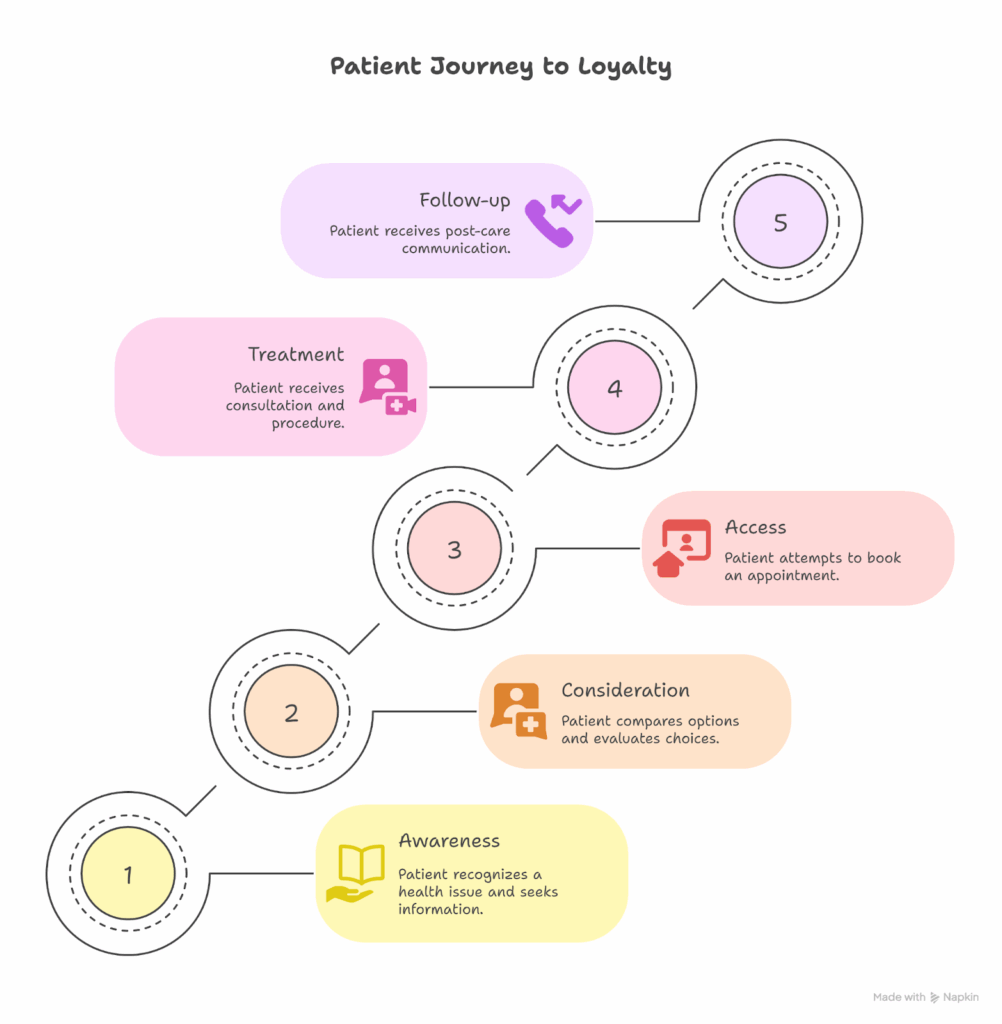
The stages are simple:
- Awareness. A patient realises something’s wrong like pain, a visible gap, a skin flare and starts looking for answers.
- Consideration. They compare doctors, reviews, ask friends, check prices, and worry about insurance.
- Access. They try to book, which might mean fighting a clunky website or waiting on hold.
- Treatment. The actual consultation and procedure. This is where clinical skill meets bedside manner.
- Follow-up. Post-care calls, reminders, or silence. Guess which one builds loyalty.
Why Doctors Should Care
This isn’t a marketing department hobby. It has a direct impact on your chair time and revenue.
It smooths the patient experience. Every clinic has friction points. Long waits, phones that ring out, unclear bills. Each one chips away at trust. Fix them, and patients start talking about you for the right reasons.
It drives conversions. Patients don’t search for “implantologist.” They search for “missing tooth.” If your website, ads, and staff language all meet them where they are, you’ll book more consults. Once they sit in your chair, you can introduce implants.
It sharpens your marketing. Map out the stages, then match your content.
- Awareness: blog on “Why does my tooth hurt when I bite?”
- Consideration: page on “Tooth replacement options compared.”
- Decision: ad for “Best dental implant dentist in Dubai.”
It keeps patients around. A follow-up call or WhatsApp message costs you little, but patients notice. Retention is cheaper than acquisition, and it builds reputation faster than billboards.
A Few Examples
Dental. Someone types “loose tooth treatment” into Google. They find your blog, book a consultation, and hear your recommendation for an implant. They didn’t start with implants, but they end up there.
Dermatology. A young professional searches “brown patches on face”. They see your Instagram reel, visit your clinic, and hear about chemical peel options.
Pediatrics. A parent searches “child toothache in Trichy”. They call, get a quick appointment, and appreciate a calm, friendly visit. Next time their child needs care, you’re their first call.
Notice the pattern: patients arrive with symptoms, not solutions. Your job is to connect the dots without pushing.
The Anatomy of a Useful Map
A patient journey map should capture both the visible steps and the backstage work. Otherwise it’s just pretty graphics.
- Touchpoints. Website, ads, front desk, consultation room, WhatsApp reply.
- Patient goals. Find a diagnosis, reduce pain, trust the doctor, get back to work.
- Emotions. Anxiety, relief, confusion, hope. These drive behaviour more than facts.
- Pain points. Delays, opaque pricing, endless forms.
- Opportunities. Faster callbacks, clearer FAQs, transparent fees.
The point is to see the clinic as your patients do. If your map reads like an operations manual, you’ve missed the mark.
How to Build One Without Losing Your Sanity
- Set the aim. More implant patients? Higher follow-up compliance? A map without a goal is wallpaper.
- Pick your patient type. A 40-year-old with a missing molar and disposable income isn’t the same as a parent shopping for braces. Start with one persona.
- Collect data. Read your Google reviews, listen to phone recordings, pull website analytics. Patients leave you more breadcrumbs than you think.
- Lay out the steps. Search → website → call → booking → consultation → treatment → follow-up. Keep it visual.
- Find the gaps. Calls missed? Website slow? Staff over-promising? Circle them.
- Fix, test, repeat. This isn’t a one-off exercise. Update the map as behaviour shifts.
A whiteboard and sticky notes will do. You don’t need a consultant with a six-figure PowerPoint.
Why This Converts to Leads
This isn’t about being “patient-centric” because it sounds nice. It’s about guiding people naturally from symptoms to treatment.
- Blog on “tooth pain remedies” brings them to your site.
- Your receptionist actually answers on the second ring.
- The consult is clear, not rushed.
- You follow up with a message two days later.
That chain turns a casual search into a committed treatment. The absence of that chain? Lost patient, lost revenue.
A Few Hard Truths
Patients judge you before they meet you. A slow site, an unanswered call, or a rude receptionist will undo years of training. You may think you sell implants or lasers, but what you really sell is confidence.
And confidence starts long before the procedure. If you want more “leads,” stop chasing them in isolation. Build the pathways that make patients trust you enough to listen when you recommend the right treatment.
Takeaway
Patient journey mapping isn’t decoration. It is how you turn clicks into consults and consults into completed cases. Ignore it and you will keep wondering why the implant leads never convert. Pay attention and the leads stop feeling like leads. They start looking like real patients. Contact Harvee Healthcare an healthcare specialised digital marketing agency with more than a decade of experience.