Ophthalmology Marketing: Strategies to Grow Your Eye Care Practice

Being a skilled ophthalmologist isn’t enough anymore. Patients no longer rely only on referrals or word of mouth when choosing an eye specialist. They search Google, read reviews, scroll through social media, and even skim AI-generated overviews before booking an appointment. In this environment, a clinic that isn’t visible online may as well not exist. Smart, ethical marketing helps you cut through the noise, build trust, and stay top of mind for patients. Whether you run a single-doctor practice or manage a network of clinics, the right marketing strategy can be the difference between surviving and growing.
Read more to know how to elevate your practice with effective ophthalmology marketing.
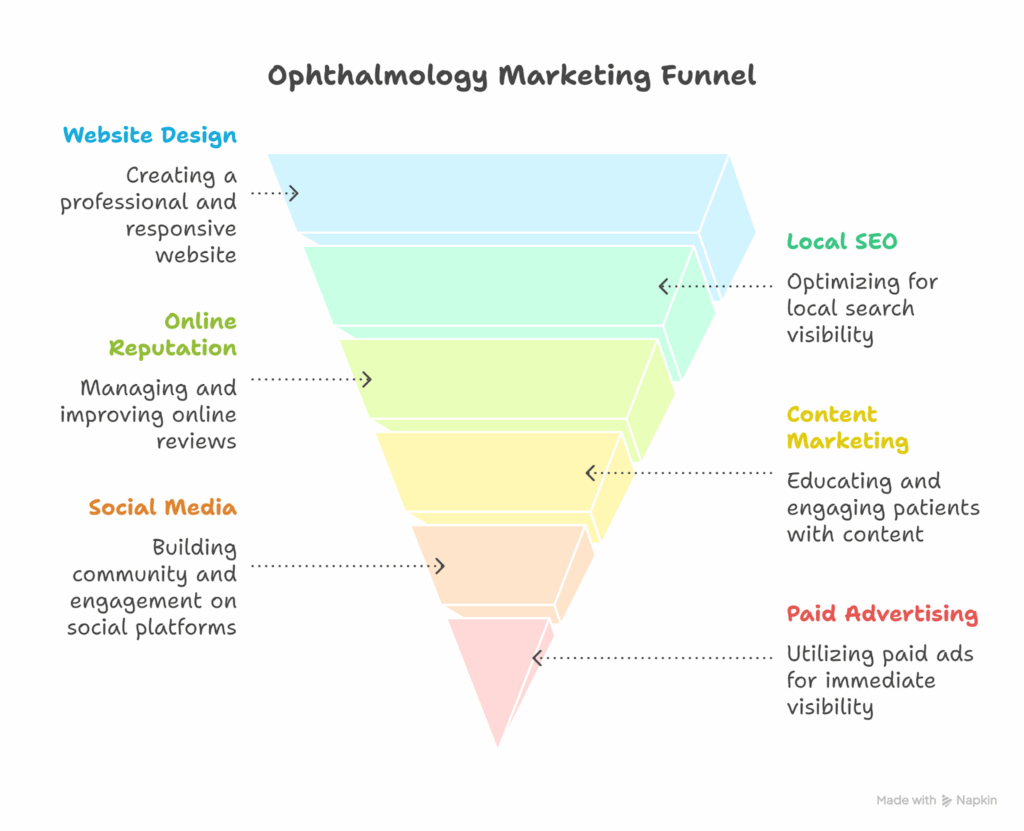
Build a Website That Converts, Not Just Informs
Think of your website as your practice’s digital front door. First impressions happen in seconds, so design matters. A clean, responsive site tells patients you value professionalism. A slow, outdated one drives them to competitors.
Load time is crucial, three seconds or less. More than half of your visitors are on mobile, so every page must resize seamlessly. Place clear calls-to-action: “Book Appointment,” “Schedule Consultation,” or “Call Us Today.” These should be visible but not overwhelming. Update your design every two to five years to meet new user expectations and keep search engines happy.
Local SEO: Get Found in the Right Searches
Ranking on Google matters, but ranking locally matters more. Nearly half of all searches include local intent, like “ophthalmologist in Dubai” or “eye specialist near me.”
Start with your Google Business Profile. Fill it out completely with location, phone number, hours, photos, and services. Add posts regularly. Encourage patients to upload pictures or leave reviews—it boosts credibility.
Optimize your website with location-based keywords in headings, meta tags, and alt text. Write pages targeting specific services and locations, such as “Cataract Surgery in Bangalore” or “LASIK Specialist in Chennai.” Build backlinks from local healthcare directories and news outlets to strengthen your domain authority.
Online Reputation: Reviews Are Your Digital Word of Mouth
Patients trust online reviews almost as much as recommendations from friends. A 4.5-star rating on Google can tip the scales in your favor more than a billboard.
Ask happy patients to leave reviews immediately after appointments. Automate the request with email or SMS reminders. Respond to every review, positive or negative. A polite, professional reply to criticism shows you care and can even turn a detractor into a loyal patient.
Handle testimonials carefully. Using patient images or video can expose you to privacy risks. If you must, anonymize details and always get explicit, signed consent. Create a private complaint channel, like a dedicated email, so issues don’t spill directly onto public platforms.
Content Marketing: Educate to Build Trust
Patients come to you with questions. Content that answers them builds authority and drives traffic.
Write blogs that cover common eye problems—glaucoma, cataracts, myopia management, or dry eye treatment. Explain complex procedures like LASIK or vitrectomy in plain English. Break down myths about eye health.
Video is even more powerful. Record short clips of doctors explaining treatment options or giving quick eye-care tips. Upload them to YouTube and embed them on your site. Infographics also work well for simplifying complex topics. Keep the focus on patient education, not sales, so patients trust the information.
Social Media: More Than Likes and Shares
Social media isn’t about vanity metrics; it’s about community.
Know your platforms. Facebook reaches older patients, Instagram appeals to younger ones, and LinkedIn works for professional networking. Use them to share eye-care tips, seasonal reminders (like UV protection in summer), and updates about your practice. Introduce your team to humanize your brand.
Keep content ethical and professional. Always post through a business page, not personal accounts. Run targeted ads to reach people within specific demographics, like parents of school-aged children for pediatric ophthalmology or seniors for cataract awareness campaigns.
Paid Search Advertising: Visibility on Demand
SEO takes time. Google Ads deliver immediate visibility.
Use PPC campaigns to target high-intent searches, such as “LASIK surgery cost” or “best eye doctor near me.” Direct these ads to high-converting landing pages with clear CTAs, not your homepage.
Track performance closely: click-through rate, cost per lead, and conversion rate. Tools like Google Performance Max let you run campaigns across Search, Display, YouTube, and Maps, ensuring patients see your clinic at multiple touchpoints before booking.
Traditional Marketing Still Works—With a Twist
Digital dominates, but don’t write off offline methods.
Host free vision screening camps or partner with schools for eye check-ups. Sponsor local events or community drives. These activities build goodwill and visibility in your area.
Print ads in regional newspapers still reach semi-urban audiences. Billboards can announce new technology or locations but are most effective when paired with digital campaigns. Local radio remains powerful for reaching older populations.
Patient Retention: Don’t Just Attract, Keep Them
Acquiring new patients is expensive. Retaining them costs less and builds steady growth.
Offer online booking with automated reminders via SMS or WhatsApp. Reduce no-shows with follow-up calls. Send educational tips or clinic updates through WhatsApp to keep patients engaged.
Run referral programs to reward patients who recommend your clinic. Loyalty programs—like discounts on follow-up visits—encourage repeat appointments. Collect feedback with short surveys to spot service gaps before they become problems.
AI in Ophthalmology Marketing: Use with Caution
Artificial intelligence is a double-edged tool.
It can micro-target ads, predict patient behavior, and automate chatbots for appointment booking. AI-powered CRMs help analyze data for personalized campaigns. But unchecked algorithms amplify bias, and generative tools sometimes create inaccurate content.
Always pair AI with human oversight. Use it for efficiency, not decision-making. Think of it as a scalpel—useful in skilled hands, dangerous otherwise.
Measure Success: Data, Not Guesswork
Marketing without measurement is like examining an eye without a lens.
Track website visits, patient inquiries, and booked appointments. Calculate cost per lead and cost per acquisition. Use dashboards that combine data from Google Analytics, Google Ads, and CRM systems.
Set up campaign-specific tracking: unique landing pages, separate phone numbers, or distinct promo codes. This way, you’ll know which channel brings real patients and which drains the budget.
Ethics and Compliance: The Non-Negotiables
Healthcare marketing isn’t the Wild West. Regulations apply.
Don’t exaggerate results or advertise services you don’t provide. Respect patient privacy, and never post identifiable patient details without written consent. Solo practitioners often face stricter rules than hospitals, but all providers should follow ethical codes.
When in doubt, have your marketing vetted by legal counsel. A single violation can hurt your reputation more than any bad review.
Takeaway
Marketing for ophthalmology practices blends digital visibility, community presence, and patient retention. It’s not about gimmicks but about building trust while staying compliant. From SEO to paid ads, reviews to retention, each tactic works best as part of a consistent, patient-centric strategy.
For ophthalmology practices ready to grow with structured, ethical marketing, contact Harvee Healthcare today. Our team specializes in healthcare digital marketing that delivers measurable results and helps you stay ahead in a competitive field.