
How to Get More Patients in 2025: A Complete Healthcare Blueprint

Wondering how to get more patients in 2025? The answer lies in moving beyond word of mouth and adopting strategies that meet patients where they are online. Today’s healthcare market is crowded, and patients research clinics, read reviews, and compare options before booking. To stand out, your practice needs a strong digital presence, consistent reputation management, and marketing tactics built for today’s search-driven world.
Why Patient Acquisition is the Biggest Challenge for Clinics in 2025
Running a clinic is hard enough. Attracting new patients feels like a bigger battle. Word of mouth and flyers no longer move the needle. Patients search online, check reviews, and compare clinics before booking. With competitors multiplying, visibility is survival.
Build a High-Converting, Mobile-First Healthcare Website
Your website is the first impression. If it’s slow or outdated, patients will leave. Over 60 percent of web traffic comes from phones, so design for mobile first.
Conversion matters as much as design. Prominent calls-to-action like “Book Appointment” or “Check Insurance” turn visits into leads. Even a phone number in your header can double inquiries. Refresh your site every few years to match modern expectations.
Local SEO for Doctors and Clinics: Dominate Google Maps Results
Patients search “eye doctor near me,” not “best clinic worldwide.” If you’re not ranking locally, you’re invisible.
Start with a complete Google Business Profile. Add hours, phone, services, and photos. Keep your Name, Address, and Phone (NAP) consistent across directories like Healthgrades or Yelp. Inconsistent details lower trust with search engines.
Create service pages linked to your city, like “Cataract Surgery in Dubai.” Earn backlinks from local organizations, chambers, or healthcare sites to strengthen authority.
Online Reviews and Reputation Management: The New Word of Mouth
Half your future patients decide based on reviews. Most won’t consider a clinic below four stars.
Ask for reviews right after visits, while the experience is fresh. Automate reminders by text or email. Respond to every review—especially negative ones. A professional reply signals you care and can win back doubters.
Use testimonials carefully. Stick to text or anonymize details unless you have explicit consent. Better yet, give patients a private complaint channel before issues spill onto Google.
Staff Training and Internal Marketing: Building Operational Trust
Your staff shape the patient’s experience long before they see you. A cold receptionist undoes thousands spent on ads.
Train front-desk teams in courtesy, accuracy, and quick communication. On your website, show real staff and updated qualifications. Ditch stock images. Patients can spot them instantly.
Paid Ads for Healthcare: How PPC and Google Ads Drive New Patients
Google Ads let you target high-intent searches like “root canal near me.” Direct traffic to landing pages built for conversions, not your homepage. Keep the message clear, the CTA strong, and distractions minimal.
One warning: skip retargeting unless cleared legally. HIPAA doesn’t mesh with tracking pixels, and fines aren’t worth the risk.
Social Media Marketing for Doctors: Target the Right Audience
Facebook works for older patients, Instagram for younger ones, LinkedIn for professional networking. Share useful content—eye care tips, seasonal reminders, or team updates. Keep it professional and ethical. Because social media marketing is less about likes, more about reaching the right people.
Targeted ads deliver results when aimed at the right groups. Women over 30 click most on medical ads. Match your message to the audience that actually engages.
Content and Video Marketing: Educate, Engage, and Convert Patients
Patients search questions daily. Be the clinic that answers.
Write blogs on conditions like glaucoma, dry eyes, or dental implants. Use plain language, not medical jargon. Debunk myths. Address real patient concerns.
Video builds trust even faster. A short clip of you explaining LASIK or cataracts carries more weight than pages of text. Post to YouTube and embed on your site. Google rewards pages that hold attention.
24/7 Online Booking and Telemedicine: Patient Convenience That Builds Loyalty
Patients expect flexibility. If they can’t book after hours, they’ll find someone who allows it.
Add 24/7 online booking linked to your homepage and Google profile. It reduces no-shows and saves staff time. Offer telemedicine for quick follow-ups or consults. Patients with busy schedules will value it.
Digital intake forms also cut paperwork by up to 70 percent. That frees staff for meaningful interactions.
Patient Retention Strategies: Referrals, Loyalty Programs, and Payment Plans
Keeping patients costs less than replacing them.
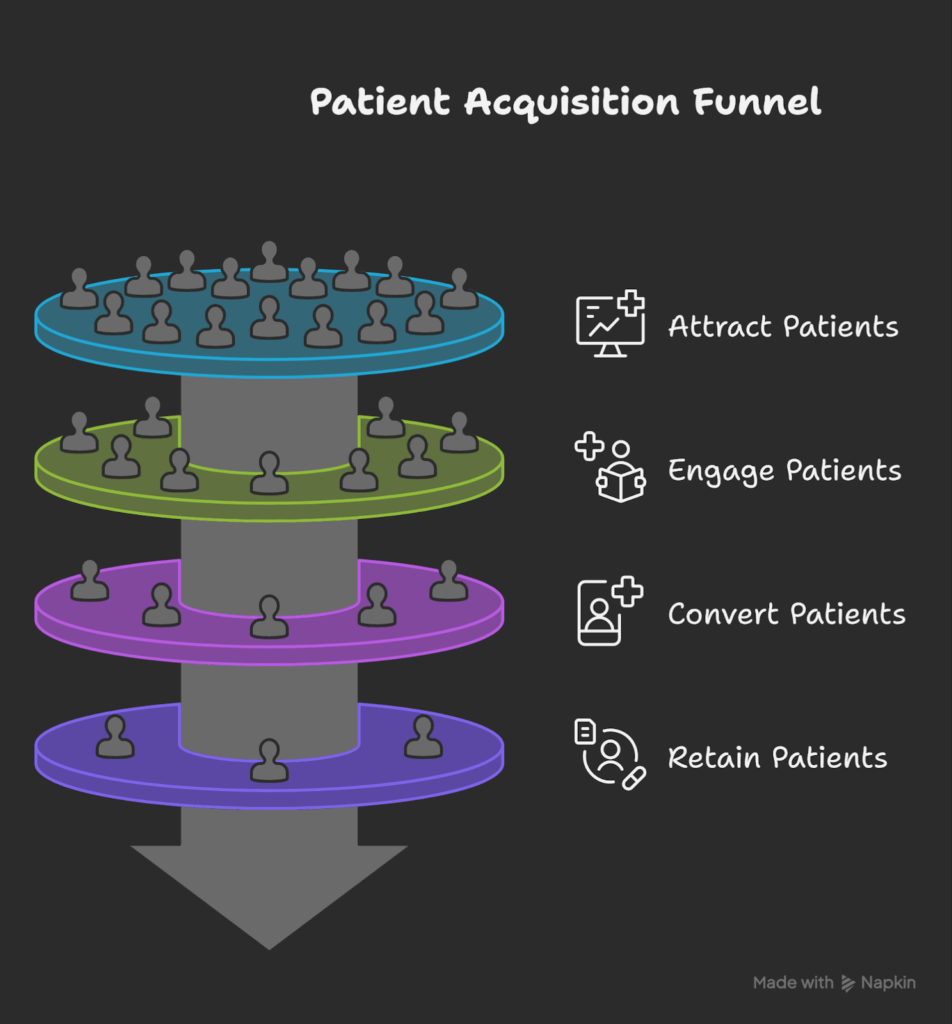
Re-engage lapsed patients with email or SMS reminders. Build referral programs with small perks like discounted visits. Offer loyalty rewards for regular check-ups.
Cost remains a barrier. Provide installment plans, upfront discounts, or sliding scales. Patients appreciate transparency more than polished taglines.
Using AI in Healthcare Marketing: Efficiency with Caution
AI can help, but it isn’t magic. Use it for data analysis, targeting, and chatbots. Don’t hand it the keys. Algorithms misfire, and generative tools hallucinate.
Treat AI like an intern: fast, helpful, and in need of supervision.
Data-Driven Growth: Measuring ROI with Analytics and CRM Tools
Track traffic, leads, bookings, and cost per lead. Use dashboards that combine Google Analytics, Ads, and CRM data. Keep results visible and actionable.
Tie campaigns to unique phone numbers, landing pages, or codes. Otherwise, you won’t know what’s driving growth and what’s wasting money.
Compliance in Healthcare Marketing: Avoiding Costly Mistakes
Healthcare marketing has rules, and ignoring them costs more than ad spend.
Don’t claim results you can’t prove. Don’t share patient details without written consent. Solo practices often face tighter limits than hospitals, but everyone’s accountable.
When in doubt, run campaigns past legal. One compliance error can undo years of trust.
Generative Engine Optimization (GEO): Preparing for AI Search Results
Search is shifting fast. AI now answers half of patient queries before they click.
Write content clear enough for AI tools to cite. Cover broad questions like “What is LASIK?” with simple, accurate explanations. That’s how you show up in AI-generated overviews.
Clinics adapting to GEO now will stay visible as AI search expands.
Physician Referrals and Community Outreach: Building Strong Networks
Professional referrals still matter. Doctors trust each other.
Make it simple for colleagues to refer patients. Offer quick appointments, direct lines, and fast record sharing. Respect their time, and they’ll keep sending patients your way.
Locally, show up. Sponsor events, run screenings, or send quarterly postcards. Even a QR code in brochures linking to booking pages works.
Future-Proof Marketing for Clinics: From QR Codes to Local Campaigns
Marketing evolves, so clinics must adapt.
Mix traditional tactics with digital. QR codes, WhatsApp updates, or loyalty cards still carry weight. Pair them with SEO and ads for maximum reach.
Takeaway
Ready to grow your practice? Contact a healthcare-specialized digital marketing agency like Harvee Healthcare to attract more patients in 2025 and beyond.