
Beyond “Near Me”: A Guide to Geo-Targeting in Healthcare

If you run a clinic or hospital, you already know the competition is brutal. A slick website and a few boosted posts won’t cut it. Patients expect to find you fast, nearby, and trustworthy.
The good news? There’s a sharper way to reach them—geo-targeting. It’s the quiet powerhouse behind efficient patient acquisition and higher ROI. Nearly 46% of Google searches are local, which means patients aren’t browsing; they’re hunting for help.
Here’s how to make sure they find you first.
Core Concepts: Making Sense of Location Strategies
If you want local patients, you need to get smart about how you show up on their screens.
Geo-Targeting in PPC
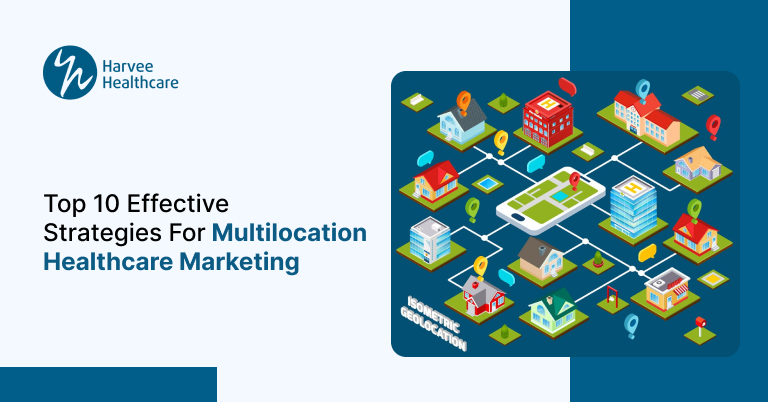
Think of geo-targeting as a smart filter on your ads. It delivers your message only to people in specific areas—by city, ZIP code, or within a few kilometers of your clinic.
It works by using location data from IPs, GPS, and mobile devices to spot users in your defined zone. Simple idea, serious precision.
Geo-Targeting vs. Geofencing
People mix these up all the time.
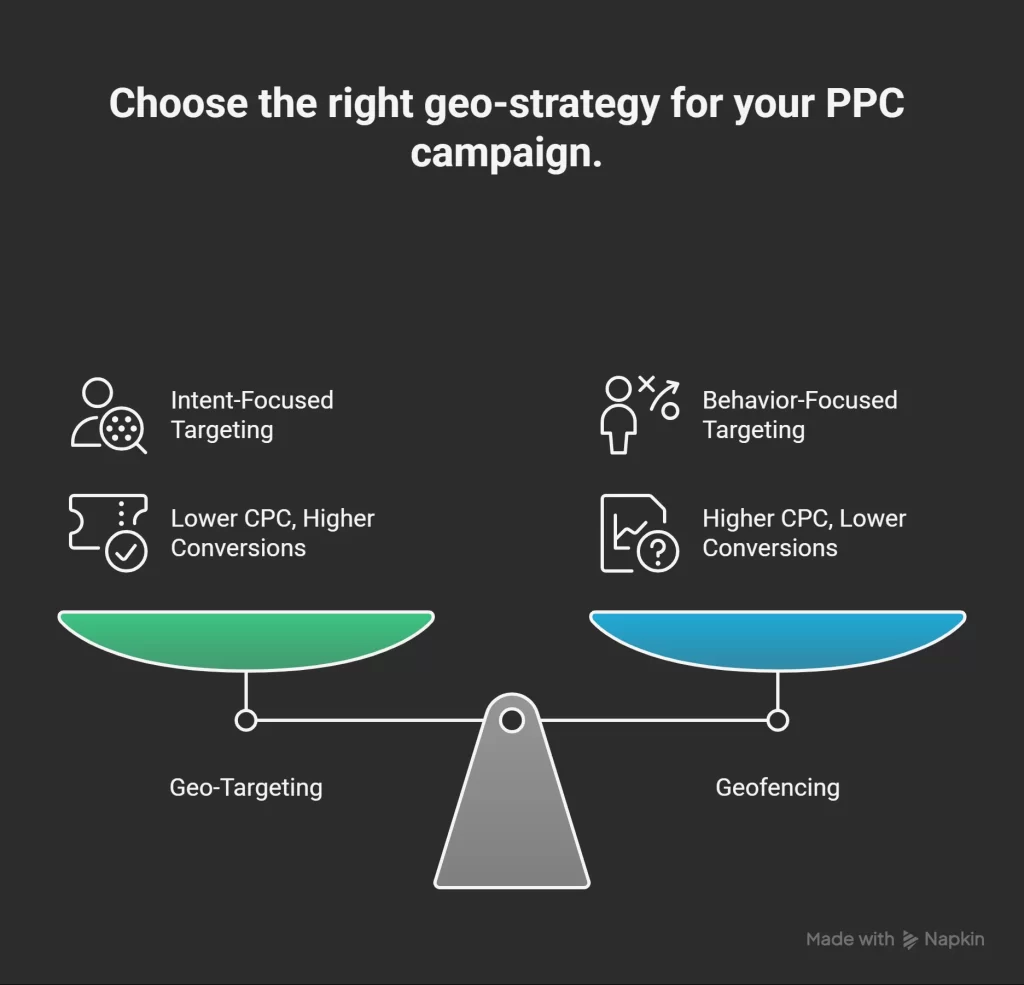
- Geo-Targeting aims for intent. You’re showing ads to people actively searching for care, which means lower CPC and higher conversions.
- Geofencing is about behavior. You draw a virtual boundary—say, around a competitor’s hospital—and show ads when someone walks in. Great for awareness, not always great for ROI.
Intent wins.
The ROI Imperative: Why Precision Pays
Geo-targeting isn’t about dots on a map. It’s about trimming fat from your ad budget.
Stop Paying for the Wrong Clicks
If your ads show up miles away from your actual service area, you’re burning money. Radius or ZIP-based targeting fixes that. You spend where it counts—on people close enough to convert. Done right, it can cut wasted spend by 63% compared to broad city campaigns.
Better Metrics, Happier CFO
- Lower CPC, Higher Quality Score: Local relevance improves Quality Score, which drops your CPC and boosts visibility.
- High-Intent Conversions: Local users aren’t casually browsing; they’re ready to book.
- Cleaner CPA: Targeted campaigns often pull a $8 cost per qualified lead versus $24 for generic ones. That’s not strategy fluff, that’s arithmetic.
The Implementation Playbook
Here’s where things get practical.
Pick Your Targeting Method
- Radius Targeting: Ideal for urban clinics—set a 5–15 km radius around your location.
- ZIP/Postal Code Targeting: Pinpoint neighborhoods or demographics that fit your service.
- Competitive Geofencing: Set a zone around a rival’s facility. Then tempt their visitors with a faster appointment or warmer reception.
Match Keywords to Real Searches
Patients type what’s on their mind: “ENT near me,” “dental clinic open now,” “child specialist close by.” Match that urgency.
Use local terms in your ad copy. Not “Find a doctor near you,” but “Book a pediatrician in Koramangala today.” You’ll boost both engagement and ad rank.
Hyper-Local Messaging
Want clicks? Sound human.
- Geo-Customizers: Dynamically add city or neighborhood names to your ad text.
- Contextual Timing: Push flu shot ads when the weather dips. Talk about knee pain when it rains. Relevance beats reach every time.
- Mobile First: If your site isn’t mobile-friendly, your budget is walking out the door.
Measuring What Matters
Good marketing is math with empathy. Measure it or it doesn’t exist.
Core KPIs
- CTR: Aim for 3–5%.
- Conversion Rate: 5% is solid; 10–15% means you’re doing something right.
- CPA: Lower is better, always.
- Quality Score: Keep it above 7 or Google will quietly charge you extra for mediocrity.
Smarter Attribution
Not every patient books online.
- Offline Conversion Tracking: Tools can track if someone who saw your ad actually walks into your clinic. It’s like connecting your digital handshake to a physical visit.
- Cross-Device Tracking: If they click on mobile and book later on desktop, make sure credit goes where it’s due.
Using Tech to Stay Ahead
- AI and Automation: Let machines handle bid adjustments and retargeting. You focus on strategy.
- Data Centralization: Multi-location hospitals drown in data silos. ETL systems unify it so leadership sees one clean picture, not 12 messy spreadsheets.
Compliance and Responsibility
Targeting patients isn’t a free-for-all. There are guardrails, and you need to stay inside them.
Compliance First
HIPAA in the U.S., AHPRA in Australia—take them seriously. Breaches cost money and trust, both hard to recover.
Protect Trust Like It’s Oxygen
Encrypt data. Secure forms. Let patients opt out easily. Nobody likes feeling stalked by their own search history.
Avoid the Rookie Mistakes
- Vague Boundaries: Exclude irrelevant areas before you hit “Go.”
- Ignoring Mobile: Most searches happen on phones. If your site chokes there, the game’s over.
- Neglecting Analytics: If you’re not tracking CPA and conversion, you’re running blind.
Takeaway
Geo-targeting isn’t a buzzword. It’s what separates clinics that fill their appointment books from the ones still boosting posts and hoping for clicks. Do it right, and your ads stop shouting into the void—they start speaking directly to the right patients, at the right time, in the right place. Contact Harvee Healthcare to scale your geo-targeted marketing to the next level.